
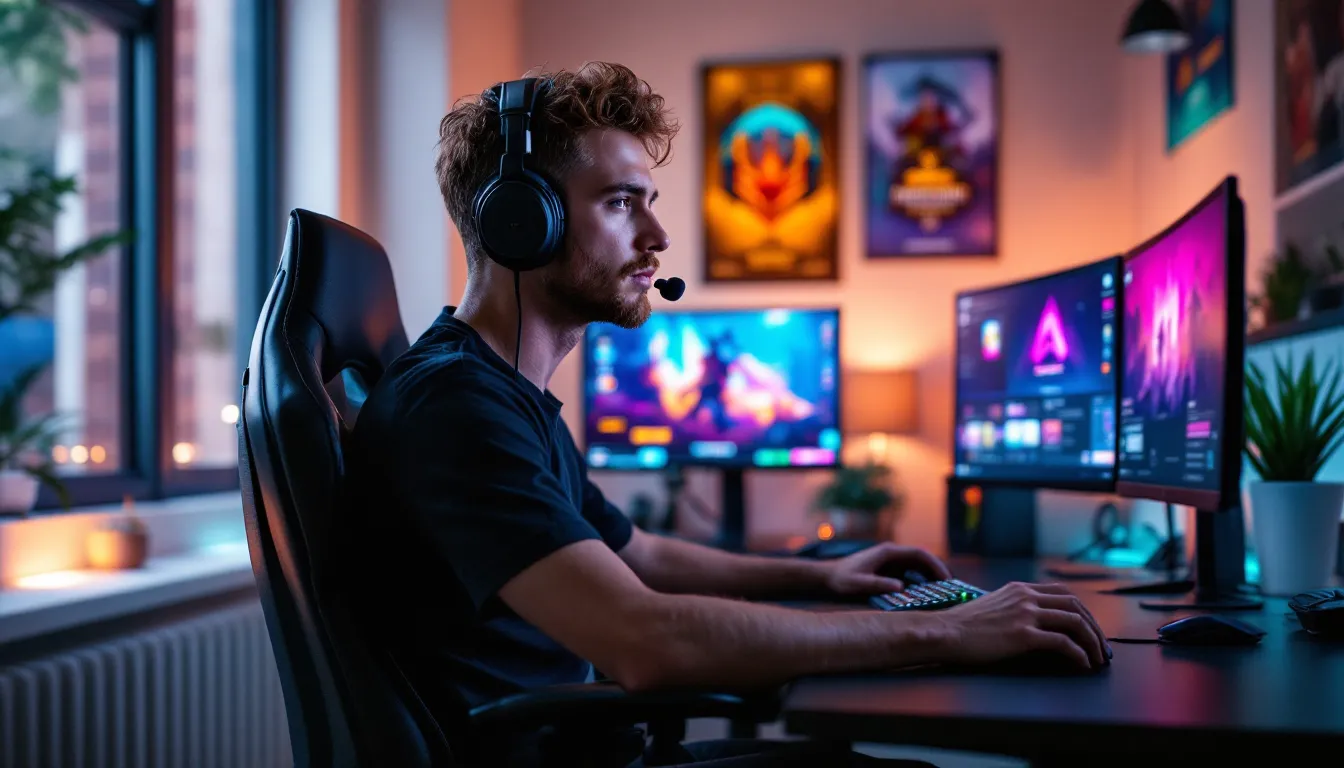
You’ve hit that wall. Your rank hasn’t budged in weeks, your K/D ratio is stuck in neutral, and your improvement feels like it’s grinding through mud. You’re not alone. Most gamers plateau because they confuse playing more with playing smarter. The difference between a hardstuck player and someone who climbs consistently isn’t talent or luck, it’s method.
Leveling up your gaming in 2026 means more than grinding hours. It requires deliberate practice, strategic thinking, and a willingness to dissect your own gameplay like a post-match VOD review. Whether you’re chasing Diamond in a MOBA, pushing for a positive win rate in battle royales, or trying to crack into your local FGC scene, the principles remain consistent. This guide breaks down the exact strategies, habits, and mindset shifts that separate stagnant players from those who actually improve.
Key Takeaways
- Level up gaming by prioritizing deliberate practice and strategic thinking over grinding hours, as measurable improvement requires identifying weaknesses and tracking progress like a post-match analysis.
- Master core mechanical skills through focused, quality repetition in aim trainers and movement mechanics, then develop game sense by actively studying the meta and analyzing your decision-making patterns.
- Optimize your competitive setup with a 144Hz+ display, quality peripherals, and proper sensitivity tuning, while keeping latency low and ergonomics correct to prevent performance degradation.
- Study professional gameplay by analyzing VOD decisions in similar scenarios to your ranked games, understanding the reasoning behind unconventional plays rather than copying tactics blindly.
- Manage tilt as a learnable skill through preventive protocols, reframe losses as data points for improvement, and overcome plateaus by mixing practice methods and reconnecting with your core motivation.
- Avoid autopiloting, focus on fundamentals before flashy techniques, and embrace ranked play despite anxiety—consistent small improvements across mechanics, game sense, and mentality compound into rank progression.
Understanding What It Means to Level Up Your Gaming
Leveling up isn’t about your account level or how many skins you own. It’s measurable improvement in execution, decision-making, and consistency. You know you’re leveling up when you’re hitting shots you used to miss, making reads you previously couldn’t see, or winning matchups that used to feel impossible.
The trap most players fall into is conflating time spent with growth. Playing 50 hours of ranked while autopiloting won’t move the needle. Real improvement requires identifying weaknesses, targeting them specifically, and tracking whether your changes actually work. If you can’t articulate what you improved this week, you probably didn’t improve.
Think of it like strength training. You don’t get stronger by lifting the same weight forever, you progressively overload. Gaming works the same way. You need to push into uncomfortable territory: playing against better opponents, forcing yourself to use advanced techniques, or deliberately practicing mechanics that feel awkward. That discomfort is where growth lives.
The 2026 competitive landscape demands this intentionality more than ever. With skill ceilings rising across every genre and matchmaking algorithms getting sharper, casual play alone won’t carry you. The players climbing ranks are treating improvement like a project, not a hobby.
Core Skills Every Gamer Needs to Master
Mechanical Skills and Muscle Memory
Aim, timing, and execution form the foundation of competitive play. In FPS titles, this means consistent flick accuracy, recoil control, and pre-aim discipline. For fighting games, it’s hit-confirming combos and input precision. MOBAs demand accurate last-hitting and ability sequencing.
Muscle memory develops through repetition, but quality repetition matters more than volume. Running aim trainers like KovaaK’s or Aim Lab for 20 focused minutes beats two hours of distracted warm-up. The key is isolating specific movements, tracking, flicking, micro-adjustments, and drilling them until they’re automatic.
Consistency separates good mechanics from flashy ones. Hitting a clip-worthy flick once doesn’t matter if you can’t replicate it under pressure. Top players prioritize reliable execution over highlight plays. They know their percentage shots and take them repeatedly, which is why their stats look boring but effective.
Don’t sleep on movement mechanics either. Strafe patterns, crouch timing, slide jumps, and positioning micro-adjustments all feed into your mechanical ceiling. Many players plateau because they master shooting but neglect movement, leaving huge optimization on the table.
Game Sense and Strategic Thinking
Game sense is pattern recognition applied in real-time. It’s predicting enemy positions from sound cues, reading rotation timings, or identifying win conditions before they’re obvious. This skill separates players who mechanically execute from those who outthink opponents.
Building game sense requires active engagement with the meta. You need to understand why strategies work, not just that they work. When you die, ask: “What information did I miss?” When you win, ask: “Was that optimal or lucky?” This self-interrogation builds the mental database that fuels good reads.
Map knowledge goes deeper than callouts. Elite players know timing windows, how long it takes to rotate from A to B, when power weapons spawn, where common pre-fires land. They use this information to apply pressure, bait cooldowns, or force unfavorable engagements. Every second of game time should feed your mental map.
Economy and resource management often get ignored outside high-level play, but they’re critical. Knowing when to save, force-buy, or invest ultimates changes entire game trajectories. Competitive titles in 2026 reward players who treat resources like chess pieces, not consumables.
Communication and Teamwork Abilities
Clear comms win games. Not shot-calling essays, short, actionable information. “Two weak on catwalk” is useful. “They’re all over there and I almost got one but, ” is noise. Good communication is information density optimized for split-second decisions.
Learn your role and play it. Every team composition has invisible responsibilities: the entry fragger creates space, the support enables plays, the IGL calls macro strategy. If you’re autopiloting a meta pick without understanding your job, you’re dead weight regardless of your K/D.
Positive comms matter more than most players admit. Tilted teammates perform worse, that’s not opinion, that’s measurable fact. You don’t need to be a cheerleader, but avoiding blame games and keeping comms focused on the next play creates better win conditions than flaming.
Adaptability in team scenarios separates five-stack players from solo queue warriors. Recognizing when to follow a questionable call (because team cohesion matters) versus when to hard-carry a different angle requires social intelligence. The best players read their team as carefully as they read opponents.
Building an Effective Practice Routine
Setting Clear Goals and Tracking Progress
Vague goals produce vague results. “Get better at Valorant” isn’t actionable. “Improve Vandal spray control to 80% accuracy at 15 meters within two weeks” gives you a target, a metric, and a timeline. Competitive resources like Mobalytics offer detailed performance tracking that turns abstract feelings into measurable data.
Break macro goals into micro-skills. If you want to climb from Gold to Plat, identify the specific deficits holding you back. Is it crosshair placement? Map awareness? Clutch consistency? Isolate one skill at a time and drill it until it’s second nature. Trying to fix everything at once is how you fix nothing.
Track your practice like athletes track workouts. Keep a simple log: what you practiced, for how long, and any noticeable improvements or struggles. Reviewing this log reveals patterns, maybe your aim improves fastest in the morning, or your decision-making tanks after 90 minutes. Use that data to optimize your sessions.
Quantify your games beyond W/L ratio. Track deaths per round, objective time, damage per round, or whatever stat reflects your role. When those numbers trend upward, you’re improving even if your rank lags behind. Rank is a lagging indicator: performance metrics are leading ones.
Focused Practice vs. Mindless Grinding
Deliberate practice means stepping outside your comfort zone with intention. It’s playing aim trainers at speeds slightly faster than comfortable, or queueing ranked instead of normals even though the stress. Mindless grinding is autopiloting through games while watching a stream on your second monitor.
The 10,000-hour rule is mostly myth. Quality trumps quantity. One hour of focused drill work targeting a specific weakness beats four hours of distracted ranked games. Players who improve fastest are those who can maintain intense focus for shorter bursts rather than marathoning low-quality reps.
Incorporate immediate feedback loops. Use instant replay features, shadowplay clips, or built-in game analytics to review decisions within minutes of making them. The faster you identify mistakes, the faster you correct them. Waiting until end-of-season to review gameplay is like studying for a test after it’s graded.
Schedule rest like you schedule practice. Fatigue degrades performance faster than most players realize. If you’re playing worse in hour three than hour one, you’re not practicing, you’re grooving bad habits. Top competitors often practice in focused 60-90 minute blocks with breaks between, not six-hour marathon sessions.
Optimizing Your Gaming Setup for Peak Performance
Hardware That Makes a Difference
Frame rate is non-negotiable for competitive play. The difference between 60Hz and 144Hz isn’t preference, it’s measurable reaction time advantage. In 2026, if you’re serious about FPS or fighting games and still on 60Hz, you’re handicapping yourself. 240Hz+ displays are standard for top-tier players in twitch-based genres.
Peripherals matter more than most budget guides admit. A quality mouse with a responsive sensor, lightweight build, and reliable clicks directly impacts aim consistency. Mechanical keyboards with low actuation force and fast response reduce input delay. These aren’t luxury items, they’re tools that either help or hinder execution.
Latency optimization extends beyond just ping. Input lag from displays, wireless peripherals, or VSync settings compounds into noticeable delays. Wired connections, game mode on displays, and disabled post-processing effects all shave milliseconds. In competitive scenarios where trades happen in 200ms windows, those milliseconds determine outcomes.
Don’t ignore ergonomics. Wrist strain, back pain, and eye fatigue degrade performance over long sessions. Proper desk height, monitor distance, and chair support aren’t comfort luxuries, they’re performance optimizers. Many mobile gaming accessories demonstrate how even small ergonomic improvements impact consistency.
Display Settings and Sensitivity Optimization
Sensitivity is deeply personal, but there’s a sweet spot for most players. FPS players typically land between 24-80cm/360°. Too low and you can’t track mobile targets: too high and you sacrifice precision. Find your range through testing, then lock it in. Constantly changing sens means constantly rebuilding muscle memory.
Field of view (FOV) settings trade peripheral vision for target clarity. Wider FOV lets you spot flanks but shrinks enemies on-screen. Most competitive FPS players run 90-110 FOV as a compromise. Fighting games and MOBAs have less flexibility here, but understanding camera angles and how they affect spatial awareness still applies.
Color and brightness settings aren’t just aesthetics. Competitive players often use digital vibrance or saturation boosts to make enemy models pop against backgrounds. Brightness adjustments help spot targets in dark corners. Some players run stretched resolutions to enlarge character models, trading visual fidelity for clarity.
Consistency across games helps if you’re multi-genre. Using a sensitivity converter to match your cm/360° across titles means your muscle memory translates. If you play both Valorant and Apex, matching your hipfire sens reduces the adjustment period when switching between them.
Learning from the Pros: How to Study High-Level Gameplay
Watching pros isn’t entertainment, it’s research. Don’t just watch the highlights: study the boring parts. Where do they position during downtime? What angles do they hold? When do they rotate? The decision-making between fights is where games are won.
Pick one or two players who main your role and dissect their VODs. Watch the same scenario multiple times: first for the macro play, then for micro-decisions, then for crosshair placement and movement. Resources like Twinfinite break down advanced strategies and champion-specific guides that complement raw VOD study.
Compare your own gameplay to pro players in similar situations. Record your ranked games and watch a segment where you struggled, then find a pro VOD in the same map/scenario. The gap between their decisions and yours highlights exactly where you need to improve. This method is brutally effective because it makes weaknesses undeniable.
Understand why pros make unconventional plays. That weird off-angle hold or unusual item build isn’t random, it’s optimized for specific situations or counters. If you copy the play without understanding the context, you’ll fail to replicate results. High-level strategy is conditional, not universal.
Pro streams offer real-time decision-making with commentary. Many top players explain their thought process while playing, giving you direct access to their mental model. This is goldmine material for building game sense. Just avoid stream chat, it’s rarely helpful for learning.
Tournament matches show coordinated team play that ranked doesn’t replicate, but the principles translate. Timing windows, trade setups, and resource management in pro matches are exaggerated versions of what should happen in ranked. Studying competitive gaming trends helps contextualize how the meta evolves at the highest level.
Mental Game: Developing the Right Mindset for Improvement
Managing Tilt and Emotional Control
Tilt is performance poison. One tilted game cascades into three more, tanking your session winrate. Recognizing the early signs, frustration after a death, blame-shifting in comms, autopilot aggression, lets you intervene before it spirals. Top players treat tilt management like a skill, not a personality trait.
Have a tilt protocol. Some players take a five-minute break and do pushups. Others watch a funny video or switch to an alt account for lower-stakes games. The specific method matters less than having a method. Letting tilt run unchecked is choosing to lose.
Reframe losses as data, not failures. Every death is information about what doesn’t work. “I got headshot peeking that angle” becomes “that angle is pre-aimed: I need a different approach.” This mental shift from victim to scientist dramatically accelerates improvement.
Accept that variance exists. Sometimes you hit every shot and lose. Sometimes you play poorly and win. Over large sample sizes, skill emerges, but individual games are noisy. Players who tilt after a single bad game are reacting to noise, not signal. Zoom out.
Staying Motivated Through Plateaus
Plateaus are where most players quit. You’ve improved rapidly, then suddenly progress stalls. This isn’t failure, it’s consolidation. Your brain is integrating new skills before the next growth spurt. Understanding this pattern prevents giving up right before the breakthrough.
Mix up your practice when motivation dips. If ranked feels stale, run custom games with specific constraints: pistol-only, no-utility challenges, or off-role practice. These variations prevent burnout while still building transferable skills. Sometimes the best way forward is sideways.
Find a training partner or join a team. Solo queue improvement has a ceiling. Regular practice with specific players builds chemistry, creates accountability, and makes grinding less lonely. Discord communities for your main game are goldmines for finding similarly motivated players.
Celebrate small wins. Did you finally nail that advanced movement tech? Hit a new accuracy personal best? Execute a strategy you’ve been practicing? These micro-victories sustain motivation when rank isn’t moving. Progress isn’t always visible in LP.
Revisit your “why.” Why do you want to improve? For competition? Pride? Social connection? When motivation tanks, reconnecting with your core reason rekindles the fire. If you can’t find a compelling reason, maybe you need a break, and that’s okay too.
Genre-Specific Tips to Level Up Faster
First-Person Shooters (FPS)
Crosshair placement is the single highest-impact FPS skill. Pre-aiming common angles eliminates reaction time from gunfights. Most players aim too low, keep your crosshair at head level and pie corners methodically. This one habit will boost your K/D more than any sensitivity change.
Learn spray patterns for your main weapons. Most FPS titles in 2026 have predictable recoil. The first 10 bullets of your main rifle should be muscle memory. Aim trainers help with raw flicking, but in-game practice is essential for weapon-specific recoil control.
Sound is 50% of the information in FPS games. Invest in decent headphones and learn directional audio cues. Footsteps, reloads, and ability sounds telegraph enemy positions. Playing with music or poor audio is like playing blindfolded in one eye.
Utility usage separates tactical shooters from raw aim duels. Smokes, flashes, and mollies create favorable engagements. If you’re taking every fight on raw aim alone, you’re working harder than necessary. Learn lineups for your most-played maps.
Multiplayer Online Battle Arenas (MOBA)
Wave management dictates lane dominance. Learning to freeze waves near your tower, build slow pushes, or crash waves into enemy towers creates map pressure and denies resources. Most low-rank players just auto-attack mindlessly, missing this entire strategic layer.
Warding is non-negotiable. Vision controls objectives, prevents ganks, and enables picks. Treat wards like a finite resource to optimize, not a chore to neglect. Deep wards give earlier warnings: defensive wards protect splits. Context determines placement.
Objective priority wins games that kills don’t. A 20-kill loss is still a loss. Know when to trade kills for towers, when to contest dragons/barons, and when to give objectives up. Many games are thrown by fighting for objectives that don’t matter.
Champion pools should be deep enough to flex but focused enough to master. Three champions per role is the sweet spot for most players. You need enough variety to adapt to team comps and patches, but not so many that you’re mediocre on all of them.
Battle Royale Games
Rotation timing is how you avoid getting third-partied. Early rotations secure strong positions but mean more fights. Late rotations avoid early chaos but risk getting caught in the storm. The meta in most BRs in 2026 favors mid-timing, letting the initial chaos resolve, then rotating before the mad scramble.
Fight selection is critical. Not every fight is worth taking. Ask: Does this fight improve my position? Do I have a clear advantage? Can I disengage if it goes bad? Bloodthirsty players who chase every gunshot finish in the middle of the pack consistently.
Loot efficiently. Most players over-loot. You don’t need perfect loadout, you need good enough loadout and strong positioning. Spending three extra minutes finding the perfect scope means three fewer minutes securing circle position.
Endgame scenarios require different skills. Zone knowledge, height advantage, and patience matter more than mid-game aggression. Many aggressive players struggle in top-10 situations because they haven’t practiced the low-information, high-stakes decision-making that defines final circles.
Fighting Games and Competitive Platformers
Frame data knowledge is non-negotiable for competitive fighting games. Knowing which moves are plus on block, which are punishable, and what your fastest options are transforms guessing games into informed decisions. Resources like Shacknews often feature detailed frame data breakdowns for major titles.
Hit-confirming separates scrubs from competitors. Don’t commit to unsafe options on block, confirm hits before spending meter on full combos. Training mode should include hit-confirm drills at least as much as full combo practice.
Spacing and footsies matter more than combos. Most new players lab flashy combos but crumble in neutral. Learning your character’s effective ranges, whiff punishing, and controlling space wins more matches than optimal punishes. Fundamentals beat flash.
Competitive platformers demand movement mastery. Short-hops, fast-falls, and drift control are the mechanical foundation everything else builds on. If your movement is sloppy, your punish game won’t matter because you won’t be in position to capitalize.
Common Mistakes That Hold Gamers Back
Autopiloting is the silent killer of improvement. Playing on muscle memory alone means you’re not learning, you’re rehearsing. If you can’t recall specific decision points from your last game, you weren’t present. Presence is required for growth.
Blaming teammates is ego protection at the cost of improvement. Sure, sometimes you get bad teammates. But if you focus on what they did wrong, you miss opportunities to identify what you could have done differently. Obsessing over controllables is the only path forward.
Ignoring meta shifts tanks your effectiveness. Patches, balance changes, and strategy evolution happen constantly. That build that crushed last season might be trash now. Players who refuse to adapt because “this is how I’ve always played” plateau hard. Some of the recent industry-wide shifts in 2023 fundamentally changed competitive landscapes across multiple titles.
Playing too many champions/characters/legends spreads your skill development too thin. Jack-of-all-trades might sound versatile, but in competitive gaming, specialist knowledge wins. The player who mains three champions with 200 games each beats the player with 20 champions and 30 games each.
Neglecting fundamentals for advanced techniques is backwards progression. You don’t need fancy tech if you can’t execute basics consistently. Movement, positioning, and resource management matter more than flashy plays. Master boring before attempting spectacular.
Skipping warm-up is asking for inconsistent performance. Your first ranked game shouldn’t be the first time your hands touch the mouse that session. Ten minutes of aim training or casual matches prime your mechanics and decision-making.
Playing while tilted or exhausted is negative practice, you’re training bad habits. If you’re not in condition to perform, you’re better off not playing. One good session beats three mediocre ones.
Fear of ranked creates an ironic trap. Players stick to normals because they’re afraid to lose rank, but normals don’t provide the competition necessary to improve. Rank anxiety is real, but coddling it guarantees stagnation. The only way out is through.
Conclusion
Leveling up your gaming in 2026 isn’t mysterious, it’s methodical. The difference between players who improve and those who don’t comes down to intentionality. Practice with purpose, analyze your gameplay honestly, optimize your setup, and manage your mental game. Do these things consistently and progress becomes inevitable.
The beauty of competitive gaming is that it rewards effort intelligently applied. You don’t need god-tier genetics or superhuman reflexes. You need clear goals, focused practice, and the discipline to iterate on weaknesses until they become strengths. Rank is the scoreboard, but the real game is building yourself into a better player one skill at a time.
Stop grinding. Start practicing. The climb is waiting.